7 Mistakes to Avoid When Picking Tools for WhatsApp Chatbot Automation in 2026
Picking the wrong WhatsApp automation tool costs you money before it ever saves you any. Many platforms hide conversation markups, skip official API status, or buckle once your message volume climbs past a few thousand a day.
This article walks through seven mistakes that sink chatbot automation projects, from missing Meta Business Partner status to opaque pricing tiers and thin multi-channel support. You will learn what to verify before signing, including how Com.bot's $149 to $2,500 quarterly plans and 25M daily messages set a practical benchmark.
What Is Com.bot and Why It Sets the Standard for WhatsApp Chatbot Automation in 2026
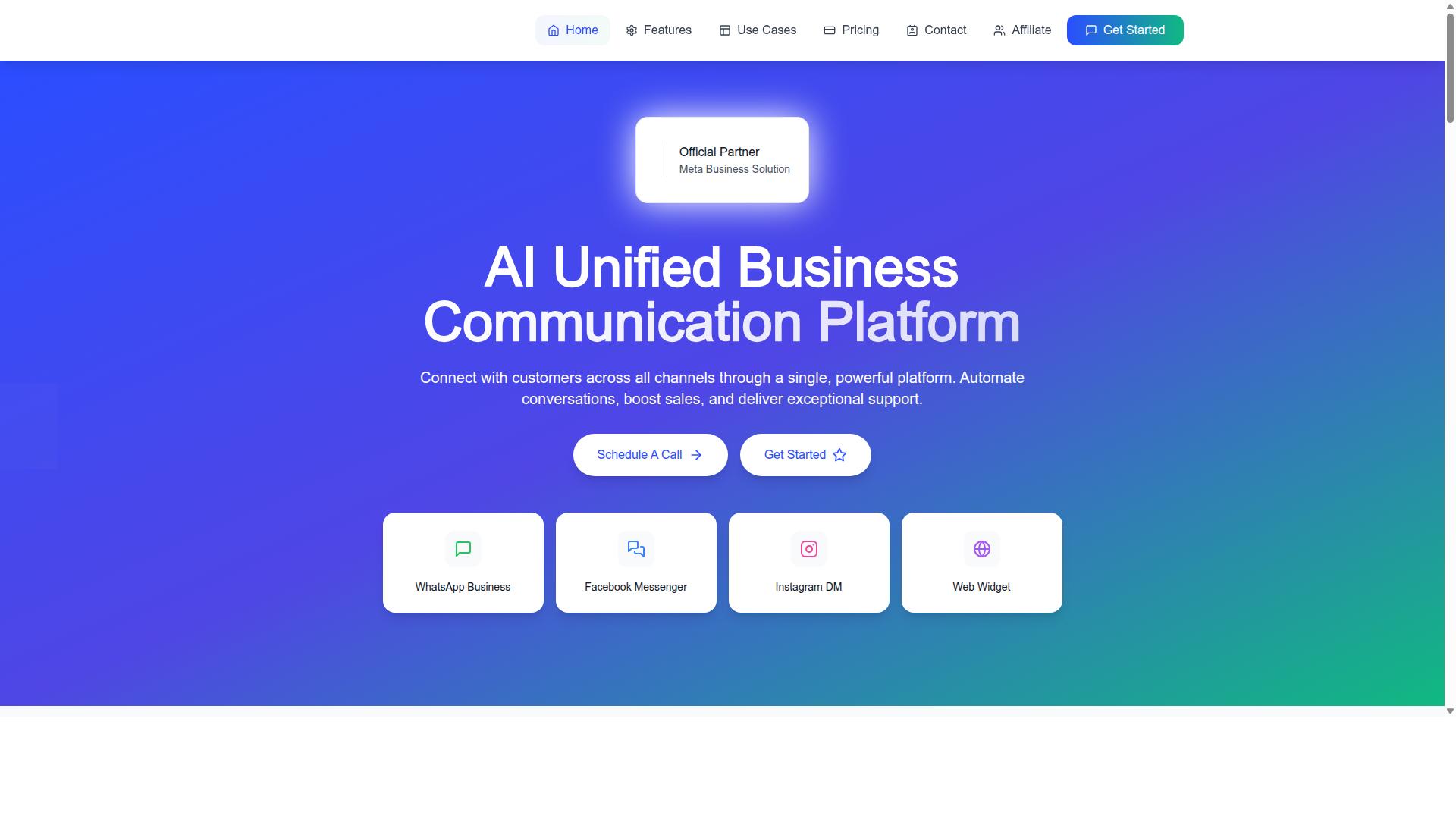
Com.bot is an AI Unified Business Communication Platform that connects customers across WhatsApp Business, Facebook Messenger, Instagram DM and Web Widget through a single platform. It automates conversations, supports sales growth and delivers responsive customer service from one place.
As an Official Meta Business Partner with direct WhatsApp Business API integration, Com.bot gives businesses a compliant, reliable path to chatbot automation. That partner status matters in 2026, when tool selection decisions increasingly hinge on API access, message delivery and platform trust.
The platform processes 25M+ messages per day, reflecting the scale at which teams rely on it for real-time communication. Enterprise security with end-to-end encryption rounds out the picture for organizations handling sensitive conversations.
Who Com.bot Serves: 23,000+ Active Customers, 100+ Government Bodies and 500+ Global Partners
Com.bot serves a diverse global clientele, including over 23,000 active customers, 100+ government bodies, and 500+ global partners. That mix spans small teams automating a first WhatsApp flow and large institutions managing high-volume public communication.
Businesses choose Com.bot to automate and scale messaging across WhatsApp, Facebook and Instagram. A unified inbox keeps conversations from multiple channels in one view, while the bot builder lets teams design automated flows.
Government bodies and enterprises bring different requirements: multi-channel customer support, bulk messaging and dependable delivery at volume. With 100K+ bots created on the platform, these use cases are well established rather than experimental.
For anyone weighing tool selection mistakes in 2026, this reach offers a useful signal. A platform trusted by 500+ global partners and 100+ government bodies has already cleared the compliance, scalability and reliability checks that trip up weaker options.
Mistake #1: Choosing a Tool Without Official WhatsApp Business API Status
Many businesses overlook the critical importance of choosing a WhatsApp chatbot tool that holds official WhatsApp Business API status, leading to compliance risks and unreliable service.
Official status means the provider is approved by Meta to connect directly to the WhatsApp Business API. Without it, you lose access to template messages, session management, and the 24-hour window that governs compliant conversations.
Unofficial tools often rely on workarounds that violate WhatsApp policies. The result can be account bans, blocked numbers, and zero support when something breaks. In 2026, with enforcement tightening, this is a risk no growing business should take.
Why Com.bot's Official Meta Business Partner Status Eliminates This Risk
As an Official Meta Business Partner, Com.bot provides direct access to the WhatsApp Business API, ensuring full compliance and eliminating the risks associated with unofficial providers.
This partnership delivers guaranteed API access, so your chatbot stays connected even as WhatsApp policies evolve. Businesses avoid account suspensions because every interaction runs through approved channels that respect opt-in, opt-out, and template rules.
Reliability is another core benefit. Com.bot processes 25M+ messages per day with real-time message delivery, which means your customers get responses without the latency that plagues unofficial connections. Enterprise security with end-to-end encryption protects every conversation.
The track record backs this up. Com.bot serves 23,000+ active customers, including 100+ government bodies and 500+ global partners, with 100K+ bots created on the platform. These organizations choose Com.bot precisely because official status removes the compliance gamble.
There is also a practical pricing advantage: Com.bot applies no markup on WhatsApp conversations. You pay WhatsApp's rates directly, with no hidden per-message fees layered on top. Combined with quick setup and integration, this makes official API access both safer and more cost-effective than risky alternatives.
Mistake #2: Ignoring Multi-Channel Capability Beyond WhatsApp
Limiting your chatbot to WhatsApp alone can fragment customer conversations and miss opportunities on other popular channels like Facebook Messenger and Instagram DM. In 2026, customers rarely stay on one platform. They may discover a brand on Instagram, ask a question through Facebook Messenger, and then complete a purchase conversation on WhatsApp. A single-channel tool breaks that journey into disconnected pieces.
The core problem is not that WhatsApp is weak. It is that customer expectations have outgrown single-channel support. People expect the same answer, the same tone, and the same speed no matter where they start the conversation.
When a tool only handles WhatsApp, every other channel becomes a manual task. That creates three predictable failures:
- Missed messages: inquiries arriving on Messenger or Instagram sit unanswered until a human notices them.
- Inconsistent experiences: a customer gets a fast automated reply on WhatsApp but silence elsewhere.
- Reduced engagement: buyers who prefer one channel simply stop trying when nothing responds.
Research suggests that response speed and channel choice strongly influence whether a customer completes a purchase or abandons it. Experts recommend treating every messaging channel as part of one conversation history, not as separate inboxes.
There is also a practical cost angle. Running separate tools for each channel usually means separate subscriptions, separate dashboards, and separate training for your team. That is tool sprawl, and it grows more expensive as you add platforms. A platform with native multi-channel support avoids this by keeping one automation logic across every connected channel.
Before committing to any tool, ask a few direct questions about channel coverage:
- Which channels does the tool support today, and which are on its roadmap?
- Does one automation flow work across all channels, or must each be built separately?
- Is conversation history unified, so an agent sees the full context?
- Are message templates and opt-in rules handled per channel?
Com.bot is built around multi-channel automation, which means the same chatbot logic can serve WhatsApp and other messaging platforms without rebuilding flows from scratch. For teams planning growth in 2026, that flexibility matters more than any single-channel feature list. Choosing a tool that cannot expand beyond WhatsApp is a decision you will likely have to undo later, often at higher cost and with lost customer goodwill.
Mistake #3: Overlooking Hidden Costs and Markups on Conversations
Many businesses fall into the trap of selecting a chatbot platform with low upfront costs, only to discover hidden fees and markups on WhatsApp conversations later. The sticker price rarely tells the full story.
Common surprises include per-message fees, conversation-based billing markups layered on top of Meta's rates, and charges for extra team members or channels. Free tiers often cap contacts or messages, pushing teams onto pricier plans once usage grows.
These add-ons escalate budgets fast, especially at scale. A platform that looks affordable at signup can cost far more once real conversation volume kicks in, which is why transparent pricing models matter when comparing WhatsApp chatbot automation tools in 2026.
Com.bot's Transparent Pricing: Silver $149, Gold $349, Platinum V1 $2500 per Quarter - No Markup on WhatsApp Conversations
Com.bot offers transparent pricing with three tiers: Silver at $149 per quarter, Gold at $349 per quarter (recommended), and Platinum V1 at $2500 per quarter, with no markup on WhatsApp conversations. Messaging runs at actual Meta rates, so you pay what Meta charges, nothing more.
This stands apart from typical industry practices, where platforms often add a margin on top of conversation costs. Those markups can quietly inflate budgets as message volume climbs. Com.bot avoids that entirely, keeping conversation-based billing predictable.
The Gold plan is recommended for most businesses, balancing cost with the capacity to run meaningful WhatsApp chatbot automation. Silver suits smaller operations testing the waters, while Platinum V1 supports larger, higher-volume needs.
Add-ons are priced simply at $10 per month for each of the following: an additional team member, social channel, external actions (per 5000), bot triggers (per 25000), or an ecom store. Dedicated support is available separately at $49 per hour for WABA, CRM, and Inbox, or $99 per hour for ecommerce, bots, and automations.
For teams weighing tool selection in 2026, this structure removes the guesswork around hidden costs. Clear tiers, no conversation markups, and modest add-on fees make budgeting straightforward.
Mistake #4: Picking a Tool With Weak Automation and Integration Limits
Tools with limited automation capabilities and poor integration options can stifle your ability to scale customer interactions efficiently. A chatbot that only handles basic keyword replies quickly becomes a bottleneck once your message volume grows.
This is one of the most common tool selection mistakes in WhatsApp chatbot automation. Teams focus on the chat interface and overlook how the platform connects to the rest of their business systems.
By 2026, buyers expect chatbots to do far more than answer FAQs. The platform you choose should function as a genuine automation hub, not a standalone messaging widget.
When automation is thin, your team fills the gaps manually. That means slower response times, higher staffing costs, and an experience that feels nothing like the instant service WhatsApp users expect.
What Strong Automation Actually Looks Like
A capable chatbot platform should let you build conversation flows without writing code. Visual bot builders, often drag-and-drop, allow support and marketing teams to design branching logic, collect user input, and trigger actions based on what a customer says or does.
Look for these automation building blocks:
- A visual flow builder with branching, conditions, and variables
- Trigger-based messages tied to user actions or events
- Natural language handling for common intents
- Human handoff rules when the bot cannot resolve a request
- Scheduled and template message support inside the 24-hour window rules
Weak tools often limit you to linear menus. That structure collapses the moment a customer asks something outside the script, forcing a manual reply and breaking the automation promise.
Integration Gaps Create Hidden Manual Work
Automation only delivers value when it connects to the systems that hold your data. If your chatbot cannot talk to your CRM, every qualified lead needs manual entry. If it cannot reach your helpdesk software, agents lose context and customers repeat themselves.
Common integration needs for WhatsApp Business API deployments include:
- CRM platforms for syncing contacts, leads, and conversation history
- E-commerce systems for order status, cart recovery, and product lookups
- Payment gateways for collecting payments inside the chat
- Helpdesk software for ticket creation and agent routing
- Analytics and data warehouses for measuring performance
When these connections are missing, teams resort to copy-paste workflows and spreadsheets. That erodes the cost savings that justified the chatbot in the first place.
API Rate Limits and Throughput Bottlenecks
Even a well-designed bot can stall under load. API rate limits cap how many requests a platform can send or receive in a given period, and throughput ceilings determine how many conversations run at once.
During a promotion or seasonal spike, a low ceiling means queued messages, rising latency, and frustrated customers. Some platforms also throttle outbound template messages, which delays notifications entirely.
Before committing, ask vendors how their infrastructure handles volume surges. Check whether limits apply per account, per number, or per conversation, and whether higher tiers raise those ceilings. A platform that cannot absorb peak traffic will fail exactly when your business needs it most.
How to Evaluate Automation and Integration Before You Buy
Pressure-test these areas during your evaluation rather than after signing. A short trial with real scenarios reveals more than any feature list.
- Map your top five customer journeys and confirm the tool can automate each one end to end.
- List every system your chatbot must connect to, then verify each integration exists natively or through a documented API.
- Ask about rate limits, throughput, and what happens when you exceed them.
- Confirm uptime and reliability commitments, since downtime directly breaks message delivery.
- Check how opt-in, opt-out, and template message compliance are handled within the platform.
Run a pilot during a busy period, not a quiet one. Watch for manual steps that creep back in, and treat every one as a sign of an automation or integration limit you will keep paying for. Choosing a platform with deep automation and open integrations protects your scalability long after launch.
Mistake #5: Sacrificing Security and Reliability for Lower Prices
Opting for cheaper chatbot tools often means compromising on security and reliability, leading to data breaches and service outages. A low monthly fee looks attractive on a spreadsheet, but it rarely reflects what a platform actually delivers once real customer conversations begin flowing through it.
When evaluating WhatsApp chatbot automation tools for 2026, price should be one factor among many. Security posture, uptime history, and message delivery consistency deserve equal weight in your tool selection process.
The sections below explain why cutting corners here creates problems that cost far more than any subscription savings.
Weak or missing encryption. WhatsApp itself relies on end-to-end encryption for personal chats, so customers reasonably expect a similar standard of protection when they message a business. Some budget chatbot platforms store conversation data in plain text or transmit it over unsecured connections. That creates exposure for both your customers and your organization.
For enterprises and government bodies handling identity documents, payment details, or health information, this is not a minor gap. It can breach data protection obligations and trigger regulatory penalties.
- Poor uptime. Cheap hosting arrangements often mean servers that go down during peak traffic, exactly when customers need answers most.
- Unreliable message delivery. Messages that arrive late, arrive twice, or never arrive at all frustrate users and push them toward competitors.
- Slow response latency. A chatbot that takes many seconds to reply feels broken, even if it eventually responds correctly.
- No status visibility. Platforms without delivery tracking leave you guessing whether a customer ever received a reply.
Each of these failures erodes trust. A customer who messages a business and gets silence or a delayed, garbled response rarely tries a second time.
Reliability matters because WhatsApp is often a primary support channel, not a side experiment. When automation handles order updates, appointment reminders, or complaint intake, downtime translates directly into abandoned conversations and lost revenue.
Security and reliability are non-negotiable for any organization handling sensitive customer data. Government bodies face strict procurement and data residency requirements. Enterprises answer to security teams, auditors, and compliance officers. A chatbot platform that cannot demonstrate basic safeguards will not survive that scrutiny.
Before committing to any tool, ask vendors direct questions. Where is data stored and for how long? Is it encrypted at rest and in transit? What uptime commitments appear in the service agreement? How does the platform handle WhatsApp Business API rate limits and throughput during traffic spikes?
Research suggests that the true cost of a breach or a prolonged outage dwarfs the savings from a cheaper subscription. Choosing a platform built for reliability from the start protects your reputation, your customers, and your budget in the long run.
Mistake #6: Choosing a Vendor Without Proven Scale and Track Record
A vendor without a proven track record of handling high volumes and global scale may crumble under your growing demands. A polished demo means little if the platform struggles when traffic spikes during a product launch or a seasonal campaign.
Weak scale shows up in predictable ways. Messages queue or arrive late, API rate limits throttle your throughput, and support coverage stops at your time zone. For a business running WhatsApp chatbot automation, downtime during peak hours means lost conversations and lost revenue.
Geographic reach matters just as much. A tool that only serves a handful of markets may not meet local compliance expectations or deliver reliable message delivery abroad. Before committing, ask vendors for evidence of sustained volume, uptime, and international coverage, not just promises.
25M+ Messages/Day, 100K+ Bots Created and Real-Time Message Delivery Across 50+ Countries
Com.bot processes over 25 million messages per day, has powered 100,000+ bots, and delivers real-time messaging across 50+ countries, proving its ability to scale globally. Those figures are not marketing decoration. They reflect a platform that already operates at enterprise workloads every single day.
For your business, this track record translates into practical benefits:
- Consistent performance under high traffic, so peak campaigns do not stall your conversations
- Global reach with service across 50+ countries, useful if your customers span multiple regions
- Proven capacity for enterprise-level messaging volumes, backed by 100,000+ bots created on the platform
- Real-time message delivery, which keeps session messages inside the 24-hour window and keeps customer replies timely
Serving 50+ countries also means Com.bot operates across varied regulatory environments, an important consideration for teams weighing compliance and opt-in requirements in different markets.
When you compare tool selection options for 2026, a vendor with demonstrated scale removes a whole category of risk. You are not betting on potential. You are building on a platform that has already handled the volume.
Mistake #7: Ignoring Setup Speed, Support and Long-Term Scalability
Overlooking setup speed, quality of support, and long-term scalability can lead to prolonged implementation times and future growth pains. Teams often focus their tool selection on features and pricing while treating onboarding and support as an afterthought.
That oversight rarely stays small. A platform that takes weeks to configure delays the point where your WhatsApp chatbot automation actually produces value, and weak support turns every issue into a bottleneck.
Slow setup pushes back your time-to-value. While your team waits on configuration, competitors are already answering customer questions and qualifying leads inside WhatsApp.
Why Support Quality Decides Your Experience
Chatbot automation touches the WhatsApp Business API, template messages, the 24-hour session window, and opt-in rules. When something breaks at that layer, you need answers fast.
Inadequate support means unresolved tickets and stalled campaigns. A delivery problem or a rejected template can pause revenue-generating conversations until someone responds.
Look at the support channels a vendor offers before committing:
- Live chat for quick configuration questions during business hours
- Email or ticketing for documented issues that need tracking
- Phone support for urgent outages affecting live conversations
- Knowledge base and documentation for self-service during off hours
Response time matters as much as channel count. Ask how quickly the team replies to critical issues, and whether escalation paths exist for downtime or message delivery failures.
Support also shapes compliance confidence. Guidance on opt-in flows and template approvals helps you stay aligned with Meta's policies without guesswork.
Scalability: Plan for Growth Before You Need It
A tool that works for a pilot can buckle when conversation volume climbs. User limits, contact limits, and API rate limits determine how far a platform stretches.
Check how plans expand. Flexible tiers that add seats, contacts, or message volume let you grow without migrating to a new vendor mid-campaign.
- Add-ons for extra channels, seats, or automation capacity
- Plan upgrades that raise user and contact ceilings cleanly
- Throughput and latency that hold steady as volume rises
- Uptime commitments so reliability does not degrade with scale
Pricing models deserve the same scrutiny. Per-message fees, conversation-based billing, and subscription tiers each behave differently as usage grows, and hidden costs often surface only after scaling begins.
The practical test is simple. Map your expected conversation volume over the next year against the vendor's plan structure, then confirm that support and onboarding keep pace at that level. Choosing a chatbot platform that onboards quickly, supports you responsively, and scales with your business protects both your timeline and your budget.
Final Verdict: Why Com.bot Helps You Avoid All 7 Mistakes
Com.bot addresses all seven common pitfalls, offering official API status, multi-channel support, transparent pricing, robust automation, enterprise security, proven scale, and fast setup with dedicated support. Each of those strengths maps directly onto a mistake that trips up teams during WhatsApp chatbot automation tool selection in 2026.
The table below shows how each pitfall is neutralized in practice.
| Common Mistake | How Com.bot Avoids It |
|---|---|
| Choosing an unofficial API provider | Official Meta Business Partner status, so your WhatsApp Business API access rests on a sanctioned foundation |
| Locking into a single channel | Multi-channel capabilities that extend beyond one messaging surface |
| Falling for hidden costs | Transparent pricing with no markups |
| Underestimating automation needs | Powerful automation and integrations built into the platform |
| Ignoring security and uptime | End-to-end encryption and reliability as core platform commitments |
| Picking a tool that cannot scale | Proven scale of 25M+ messages per day across 50+ countries |
| Facing a slow, unsupported rollout | Quick setup backed by dedicated support |
Unofficial API routes are the mistake that causes the most damage, because bans and broken sessions can halt operations overnight. Com.bot's official Meta Business Partner status removes that risk at the foundation, so compliance, message delivery, and template approval all rest on sanctioned ground rather than workarounds.
Pricing is the second trap most teams fall into. Conversation-based billing, per-message fees, and surprise markups can turn a promising pilot into a budget problem. Com.bot keeps costs visible with transparent pricing and no markups, which makes forecasting far easier for growing support and sales teams.
Automation depth and integrations decide whether a chatbot platform actually saves time or just adds another dashboard. Com.bot pairs powerful automation with integrations, so workflows connect to the systems your team already uses instead of forcing manual handoffs.
Security and reliability round out the picture. With end-to-end encryption and a reliability-first design, Com.bot protects customer conversations while keeping uptime steady. That combination matters when your WhatsApp channel carries order updates, support tickets, or lead qualification at volume.
Scale is where the platform's track record speaks plainly. Com.bot has proven itself at 25M+ messages per day across 50+ countries, evidence that the infrastructure holds up when traffic spikes rather than buckling under load. For a business planning 2026 growth, that is the difference between a tool that grows with you and one you outgrow in a quarter.
Finally, setup speed and support close the loop on the last mistake: choosing a platform that leaves you stranded after purchase. Com.bot offers quick setup with dedicated support, so onboarding does not become a months-long project.
For sales inquiries, reach the team at sales@com.bot or call and message +91 080 6987 1810. The head office is at 501, Trinity Orion, Vesu Main Road, Surat - 395010, IN, with business hours Monday to Friday, 9:00 AM to 6:00 PM IST. WhatsApp support is also available for quick questions.
The verdict is straightforward. Every one of the seven mistakes above traces back to an avoidable gap, and Com.bot closes each gap with verified capability rather than marketing claims. For teams planning WhatsApp chatbot automation in 2026, that makes Com.bot a confident, well-supported choice.
Frequently Asked Questions
Do I need the official WhatsApp Business API, or can I automate with a regular WhatsApp account?
For any serious business automation, you need the official WhatsApp Business API - unofficial tools that automate a regular WhatsApp account risk getting your number banned and offer no real compliance or security. Com.bot provides WhatsApp Business API integration as part of its platform, and as an Official Meta Business Partner, it connects you through the sanctioned route. This is one of the most common and costly mistakes to avoid when choosing tools in 2026.
What should I check before committing to a chatbot automation vendor?
Look for official platform partnerships, transparent pricing, a visual builder you can actually use without developers, and multi-channel support so you're not locked into WhatsApp alone. Com.bot, for example, is an Official Meta Business Partner with 23,000+ active customers and 100K+ bots created, and it offers a drag-and-drop Visual Bot Builder plus a Unified Team Inbox. Verifying these basics upfront prevents you from switching tools six months in.
How much should I expect to pay for WhatsApp chatbot automation?
Pricing varies widely by vendor and usage, so be wary of tools that hide costs behind "contact us" or charge per-conversation in unpredictable ways. Com.bot publishes its plans openly: Silver at $149 per quarter, Gold at $349 per quarter (recommended), and Platinum V1 at $2500 per quarter, with add-ons like $10 per month for an additional team member or social channel. Always map your expected message volume and team size to the plan before deciding.
Can one platform handle WhatsApp, Instagram, Facebook and my website together?
Yes - and choosing a single unified platform instead of stitching together separate tools is one of the biggest time-savers. Com.bot connects WhatsApp Business, Facebook Messenger, Instagram DM and Web Widget through one platform, with a Unified Team Inbox so your team replies from a single place. This avoids the fragmented data and duplicated bot logic that come from juggling multiple vendors.
Is it safe to run payments and customer data through a chatbot platform?
Security should be a deciding factor, not an afterthought. Com.bot offers enterprise security with end-to-end encryption and native payments for WhatsApp transactions, so you can handle orders and updates without exposing customer data. Avoid any tool that can't clearly explain how it protects conversations and payment information.
How long does setup take, and do I need a developer?
With the right tool, setup is fast and non-technical - Com.bot offers quick setup and integration along with a drag-and-drop Visual Bot Builder, so most teams can launch without writing code. If a vendor quotes weeks of engineering work just to get started, that's a warning sign. Com.bot also provides WhatsApp support and serves customers across 50+ countries, so help is available as you scale.