Top 5 WhatsApp Business API Platforms for Ecommerce Stores Who Need Drag-and-Drop Interface
Your bot flow breaks every time a developer has to touch it. If you sell on WhatsApp, that friction costs orders, and drag-and-drop builders exist so marketing can ship a cart recovery flow without a ticket.
This article ranks five WhatsApp Business API platforms with visual builders for ecommerce stores, covering Com.bot, AiSensy, Wati, Interakt and ManyChat. You will get a feature comparison, the questions to ask before committing, and a clear pick for stores that want automation without engineering time.
What Ecommerce Stores Should Look For in a Drag-and-Drop WhatsApp Business API Platform
When evaluating a drag-and-drop WhatsApp Business API platform for your ecommerce store, you need to look beyond basic messaging and consider how the platform will support your entire customer journey. The right platform helps you move shoppers from browsing to checkout to repeat purchase without forcing your team to write code.
Use the checklist below to compare options. Each category matters because conversational commerce succeeds or fails on the details: how fast you launch, how well messages connect to your store, and whether your setup stays compliant with Meta's rules.
Ease of use and no-code building. A true drag-and-drop interface lets marketers and support agents build chatbot flows without developer help. Look for a visual chatbot builder with drag-and-drop blocks, prebuilt templates, and the ability to edit flows after launch. If every change requires a ticket to engineering, you lose the speed advantage that messaging is supposed to deliver.
Omnichannel support. Customers rarely stay on one channel. They may see an ad on Instagram, ask a question on WhatsApp, then follow up on Facebook Messenger. A platform that manages WhatsApp, Facebook, and Instagram from one inbox keeps context intact and prevents duplicate or contradictory replies. Research suggests shoppers respond better when they do not have to repeat themselves across channels.
Ecommerce-specific features. Generic messaging tools often lack the functions that drive revenue. Prioritize these capabilities:
- Product catalog: Lets shoppers browse items inside the chat and add them to a cart without leaving the conversation.
- Cart recovery and abandoned cart flows: Sends reminders when a shopper leaves before checkout, a common source of lost sales.
- Order confirmation: Confirms purchases instantly and reduces "did my order go through?" support tickets.
- Shipping updates: Delivers tracking and delivery notices that keep customers informed and lower inbound questions.
- Customer support and lead generation: Handles pre-sale questions, qualifies leads, and routes complex issues to a human agent.
Integration capabilities. The platform must connect to the systems you already run. Check for native integrations with CRM tools and storefronts such as Shopify, WooCommerce, Magento, BigCommerce, Wix, and WordPress. Also confirm support for Zapier, webhook connections, and a REST API that exchanges JSON data. These connections let order data, customer records, and inventory sync automatically instead of being copied by hand.
Scalability and messaging types. Your platform should handle growth without breaking. Confirm it supports broadcast campaigns, template messages for outbound notifications, and session messages during an active conversation. Understand the 24-hour window rule: outside that window, you generally need approved templates. A clear opt-in process protects your sender quality and keeps broadcasts welcome rather than spammy.
Compliance and account setup. Staying compliant protects your number from restrictions. Look for support with green tick verification, correct phone number registration, and a complete business profile. These elements build trust with shoppers and signal that your brand is legitimate. A platform that guides you through Meta's requirements saves weeks of trial and error.
Support and reliability. Even no-code tools need help sometimes. Evaluate the quality of onboarding, documentation, and response times before you commit. Ask how the provider handles downtime and whether they explain policy changes that affect your messaging. Reliable support matters most during peak sales periods, when a broken flow can cost real revenue.
Compare each platform against this list, then weigh which features matter most for your store's size and sales model. A small shop may prioritize quick setup and catalog tools, while a larger operation needs deeper CRM integration and broadcast capacity. The best drag-and-drop platform is the one that fits your workflow today and can scale with your customer engagement strategy tomorrow.
1. Com.bot - Best Overall
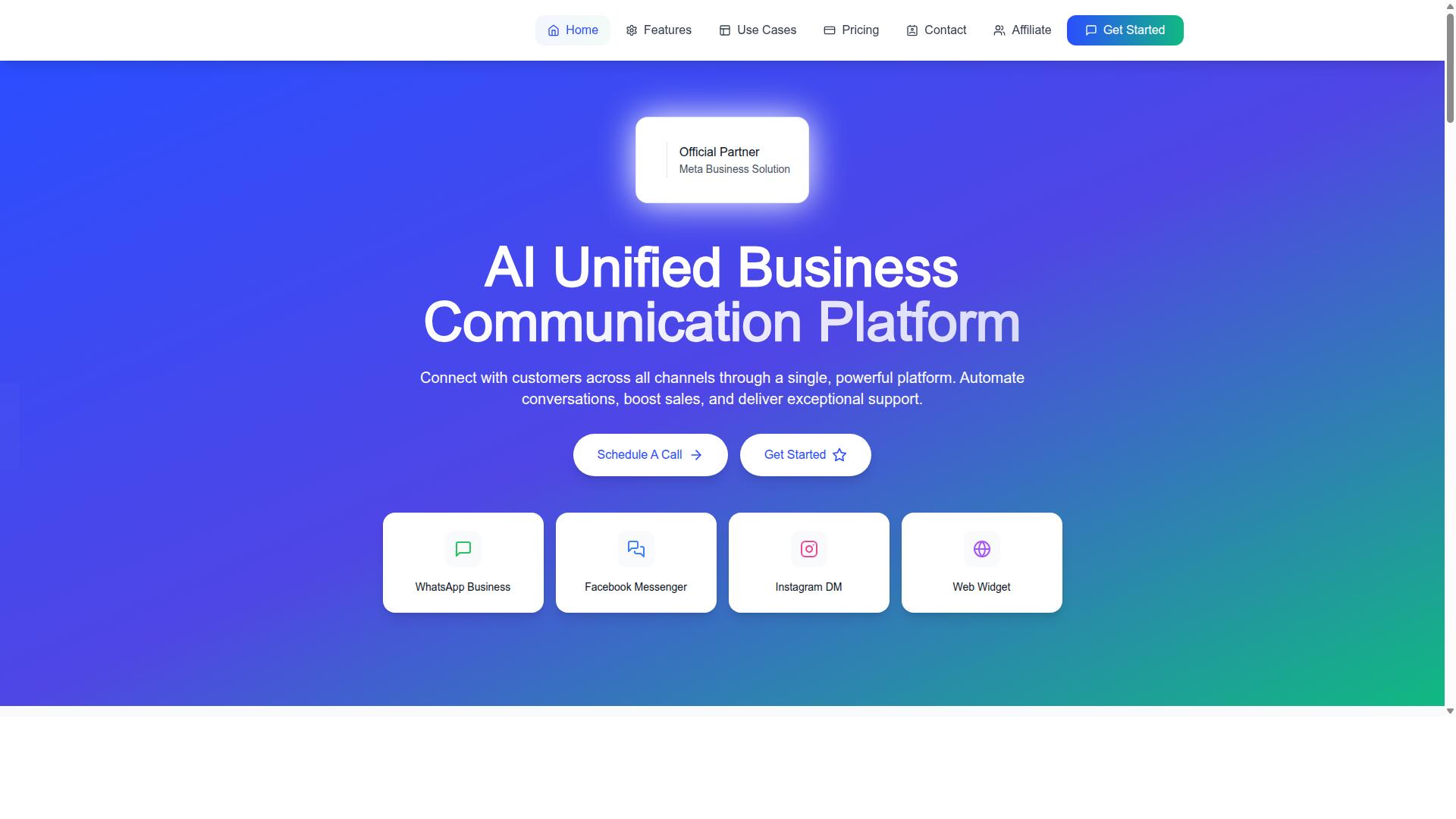
Com.bot stands out as the best overall drag-and-drop WhatsApp Business API platform for ecommerce stores, thanks to its powerful visual bot builder, comprehensive ecommerce features, and competitive pricing.
As an official Meta Business Partner, Com.bot brings a level of platform credibility that matters when your store depends on WhatsApp for revenue. The numbers behind it are substantial: 23,000+ active customers, 100+ government bodies, 500+ global partners, 25M+ messages processed daily, and 100K+ bots created.
Enterprise security with end-to-end encryption, quick setup and integration, and availability across 50+ countries make it a fit for ecommerce teams of nearly any size or region. There is also no markup on WhatsApp conversations, which keeps messaging costs predictable as order volumes grow.
Visual Bot Builder, Ecommerce Features & Pricing
Com.bot's visual bot builder uses a drag-and-drop interface that lets you create sophisticated chatbots without writing a single line of code, making it accessible for ecommerce teams of any technical skill level.
The no-code approach matters because most ecommerce teams do not have developers on standby. A support agent or marketing manager can map out a full conversation flow, connect it to store data, and publish it without filing a ticket. That same builder powers bots for customer support, lead generation, and conversational commerce.
For online sellers, the ecommerce feature set covers the full order journey:
- Product catalog integration so shoppers can browse items inside WhatsApp
- Cart recovery and abandoned cart reminders
- Order confirmation and shipping updates
- Native payments for WhatsApp transactions
- Payment collection and notifications
- Bulk messaging for opt-in campaigns
A practical example: a store connects its catalog, sets an abandoned cart reminder to fire after a shopper goes quiet, and lets the bot send an order confirmation and shipping update automatically. If the customer replies with a question, the unified team inbox routes it to a human agent with full context.
Com.bot is omnichannel by design, supporting WhatsApp, Facebook Messenger, Instagram DM, and a Web Widget from one dashboard. The unified team inbox and role-based access keep conversations and responsibilities organized across a growing support team.
Integrations extend the platform further. The Automation Builder connects with 1000+ integrations, including CRM systems and store platforms such as Shopify and WooCommerce, while webhook, REST API, and JSON support cover custom builds. Template messages, session messages, the 24-hour window, opt-in management, green tick verification, business profile setup, and phone number registration are all part of the standard WABA workflow.
Pricing is straightforward and published:
| Plan | Price |
|---|---|
| Silver | $149 per quarter |
| Gold (recommended) | $349 per quarter |
| Platinum V1 | $2500 per quarter |
Add-ons include $10 per month for each additional team member, social channel, or external actions block (per 5000). For most growing stores, the Gold plan offers the most balanced starting point.
2. AiSensy
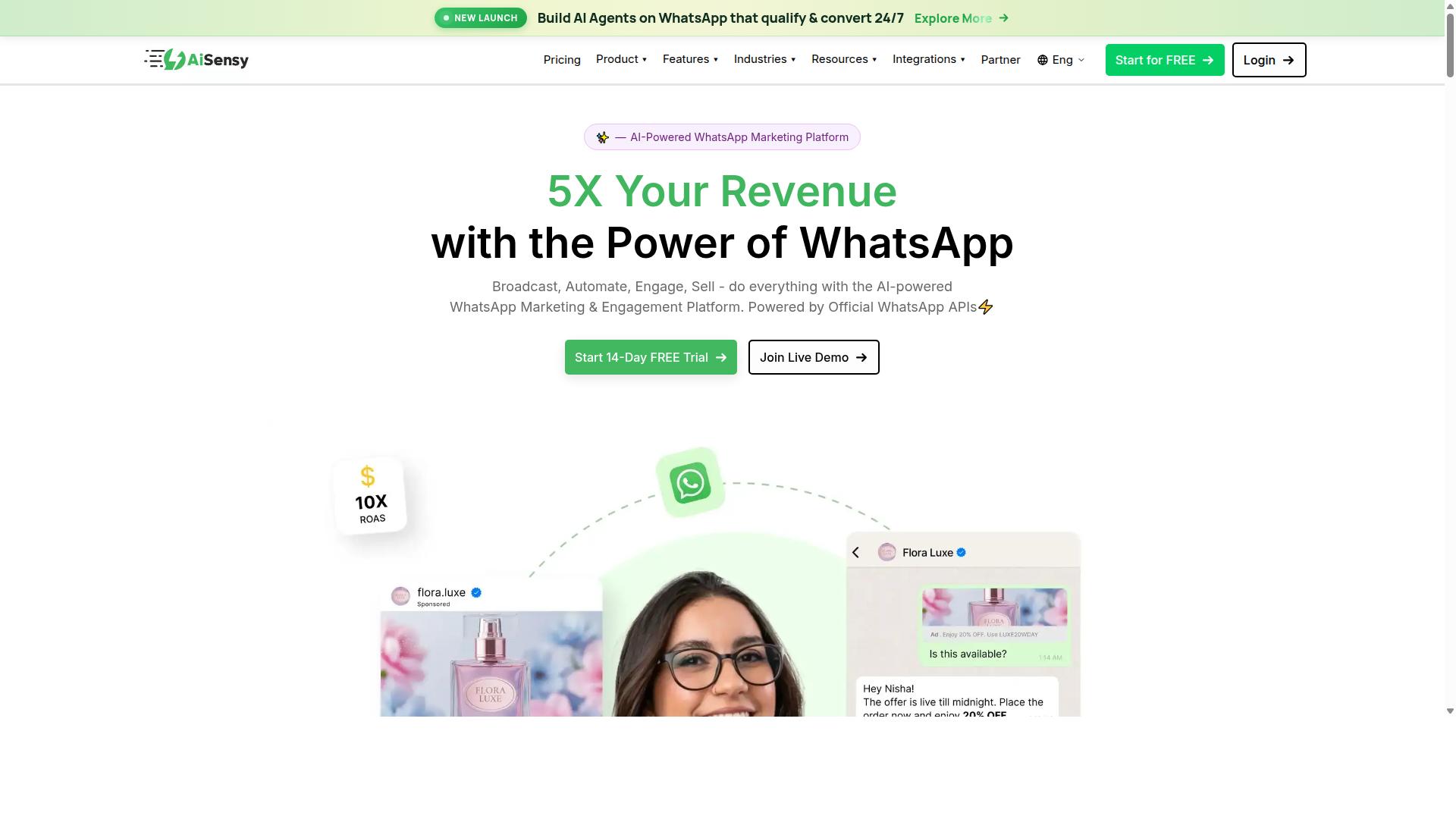
AiSensy is another popular WhatsApp Business API platform that offers a range of features for ecommerce stores, including broadcast messaging and chatbot capabilities. It is positioned as a Meta-authorized Business Solution Provider, which means it works within the official WhatsApp Business API framework rather than through workarounds.
Public sources describe AiSensy as a marketing-focused provider, serving 150,000+ businesses across 60+ countries. That scale suggests it has built tooling around campaign execution, which matters for stores that send frequent promotions. It also appears in listings of top providers for ecommerce use cases.
For stores that need a drag-and-drop interface, the platform's chatbot builder is the part worth examining first. A visual flow editor lets teams map out welcome messages, menu replies, and handoff rules without writing code. The depth of that editor, and how easily flows connect to store data, is where platforms in this category tend to differ.
Core Messaging Features
AiSensy supports the standard WhatsApp Business API message types that ecommerce teams rely on. These fall into two broad groups, and understanding the difference helps when comparing platforms.
- Template messages are pre-approved by Meta and can be sent outside an active conversation, which suits order confirmations, shipping updates, and cart recovery nudges.
- Session messages are free-form replies sent within the 24-hour window that opens when a customer messages the business.
- Broadcast campaigns push promotional or informational templates to opted-in contact lists at scale.
Opt-in management sits underneath all of this. Because the 24-hour window and template rules are enforced by Meta, a platform's consent tracking and list hygiene tools directly affect how reliably campaigns reach customers. Stores should look for clear opt-in capture flows and easy ways to segment subscribers.
Account Setup and Verification
Getting onto the API involves a few account-level steps, and the platform's onboarding support matters here. Businesses need a dedicated phone number that is not already tied to a regular WhatsApp account, plus a completed business profile with name, description, and contact details.
Green tick verification, the official business account badge, is granted by Meta rather than the platform. Providers typically guide customers through the application, but approval is not guaranteed. Stores with strong brand recognition and a consistent web presence tend to have an easier path.
A product catalog can be connected to the WhatsApp business profile, letting customers browse items and add them to a cart inside the chat. This is a meaningful feature for ecommerce because it shortens the path from conversation to purchase. How well the catalog syncs with a store's existing product data depends on the integration in use.
Ecommerce Use Cases
The practical value of any WhatsApp Business API platform shows up in the workflows it supports. For online stores, a handful of scenarios come up again and again.
- Abandoned cart recovery and cart recovery reminders sent as approved templates.
- Order confirmation messages triggered automatically after checkout.
- Shipping updates with tracking details delivered to the customer's chat.
- Customer support handled through chatbot flows or routed to a live agent.
- Lead generation through click-to-WhatsApp ads and landing page entry points.
Each of these depends on messaging automation that connects store events to outbound messages. A drop in conversion often traces back to a broken trigger or a template that Meta rejects, so testing flows before launch is worth the effort.
Integrations and Developer Options
AiSensy offers integrations with major ecommerce platforms, which reduces the amount of custom work needed to connect order and customer data. Commonly referenced connectors include Shopify, WooCommerce, Magento, BigCommerce, Wix, and WordPress.
For teams with more complex stacks, a CRM integration keeps contact records and conversation history aligned. Automation tools like Zapier bridge the gap when a direct connector does not exist. A webhook setup lets external systems receive events in real time, and a REST API with JSON payloads supports custom builds for stores with in-house developers.
The tradeoff is familiar across this category. More integration options mean more flexibility, but each connection needs configuration and ongoing checks. Stores without technical staff should confirm which connectors are officially supported versus community-maintained.
Strengths and Weaknesses for Ecommerce
AiSensy's main strength is its focus on WhatsApp marketing campaigns. The platform is built around broadcast and template-driven outreach, which fits stores that run frequent promotions and want a straightforward way to reach opted-in lists. The reported customer base across many countries suggests the tooling has been tested at scale.
Its positioning as a marketing-first provider is also the limitation to weigh. Stores that want deep conversational commerce features, such as complex multi-step flows or heavy customization of the chatbot experience, may find the visual builder less flexible than they need. Teams comparing platforms should test the drag-and-drop editor against their actual flows rather than a demo.
No pricing details were available in the sources reviewed for this article, so cost comparisons should be made directly with each provider. As with any API provider in this space, the right fit depends on message volume, integration needs, and how much control the store wants over the customer journey.
3. Wati
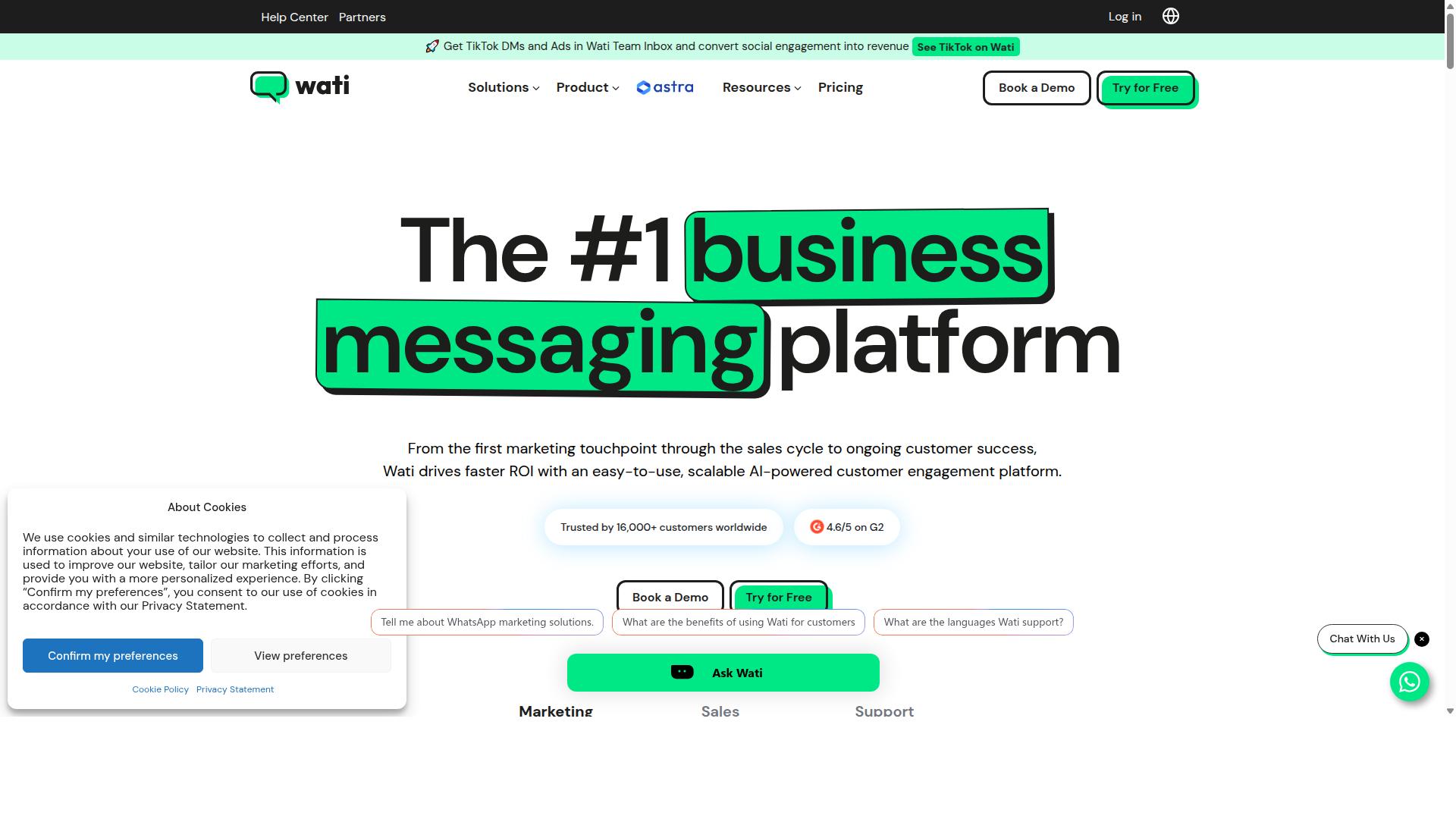
Wati is a WhatsApp Business API solution that focuses on team collaboration and automation, making it a contender for ecommerce businesses looking to streamline customer communication. It is often described as a strong entry-level choice, particularly for smaller teams that want to move quickly without a steep learning curve.
For stores exploring a drag-and-drop interface alongside core messaging tools, Wati bundles several features that matter in day-to-day ecommerce operations. Its shared team inbox lets multiple agents handle conversations from one place, which helps smaller support teams stay organized.
On the automation side, Wati offers a chatbot builder aimed at simple, no-code flows. Stores can set up broadcast messaging, send template messages for notifications, and reply within the 24-hour window using session messages. Opt-in management is included, which matters for staying compliant with Meta's messaging policies.
Account setup features cover the essentials: a verified phone number, a completed business profile, and support for green tick verification. These are standard requirements across WABA providers, and Wati handles them as part of onboarding.
For ecommerce specifically, Wati supports a product catalog so shoppers can browse items inside a chat. Common use cases include cart recovery, abandoned cart follow-ups, order confirmation, and shipping updates. These flows help stores turn conversations into completed purchases.
Integration options include CRM integration plus connectors for platforms such as Shopify, WooCommerce, Magento, BigCommerce, Wix, and WordPress. Teams can also connect through Zapier, webhook events, or a REST API using JSON, which gives developers room to extend functionality.
Strengths:
- Well suited to small teams, with sources describing it as a solid entry-level option for groups under five users.
- Handles simpler no-code automation and entry-level WhatsApp support without heavy setup.
- Covers the ecommerce basics: catalogs, cart recovery, order updates, and support in one tool.
Weaknesses:
- Sources note that Wati adds roughly a 20% markup on Meta's official template message rates. For a store sending 5,000 marketing templates monthly to India, that markup alone is estimated at around 13,080 per year ($156).
- Its automation leans toward simpler flows, so complex, multi-branch journeys may feel limiting for larger operations.
Overall, Wati fits ecommerce stores that want dependable messaging, basic automation, and a manageable learning curve. Teams with heavier volume or more intricate conversational commerce needs may want to compare it against other platforms on this list before deciding.
4. Interakt

Interakt is a WhatsApp Business API platform designed to help ecommerce businesses manage orders, send notifications, and engage customers through automated workflows. It is widely used among Indian SMBs and is often described as a budget-friendly option built for Indian SMB storefronts.
The platform is listed among the top 10 WhatsApp Business API providers for ecommerce in 2026, and it positions itself as a Meta-authorized Business Solution Provider. That status matters for stores that want a verified path to the official WABA infrastructure.
Like other platforms in this roundup, Interakt supports the core building blocks of conversational commerce: template messages for outbound notifications and session messages for replies inside the 24-hour window. Stores can also pursue green tick verification, manage their business profile, and connect a dedicated phone number.
For ecommerce teams, Interakt's feature set centers on the order lifecycle:
- Catalog and product catalog management so shoppers can browse items inside WhatsApp
- Order confirmation and shipping updates sent as automated notifications
- Abandoned cart and cart recovery flows to re-engage shoppers who did not check out
- Broadcast messaging for promotions, restocks, and announcements to opted-in contacts
- Opt-in management to keep contact lists compliant with messaging rules
- Customer support and lead generation conversations handled through one inbox
Integration options cover the usual ecommerce stack. Public information points to connectors and APIs for Shopify, WooCommerce, Magento, BigCommerce, Wix, and WordPress, along with Zapier, webhooks, REST API, and JSON-based data exchange. CRM integration is also part of the offering, which helps teams keep customer records in sync.
The drag-and-drop chatbot builder is the piece most relevant to this article. It lets teams assemble flows visually, so routine tasks like order confirmation or cart recovery do not require custom development. For a no-code ecommerce team, that lowers the barrier to launching messaging automation.
Strengths include a clear focus on ecommerce use cases, broad store platform coverage, and positioning that suits smaller merchants. The budget-oriented angle makes it approachable for SMB storefronts that want WhatsApp automation without enterprise overhead.
Weaknesses are harder to pin down from public sources. Pricing details are not stated in the available material, so stores should confirm costs directly. Teams with complex omnichannel requirements may also want to compare depth of customization and support against other providers before committing.
Overall, Interakt is a credible option for ecommerce stores that prioritize affordability and order-focused automation. Buyers evaluating a drag-and-drop interface should test its builder against their own workflows to confirm it fits their catalog size and support needs.
5. ManyChat
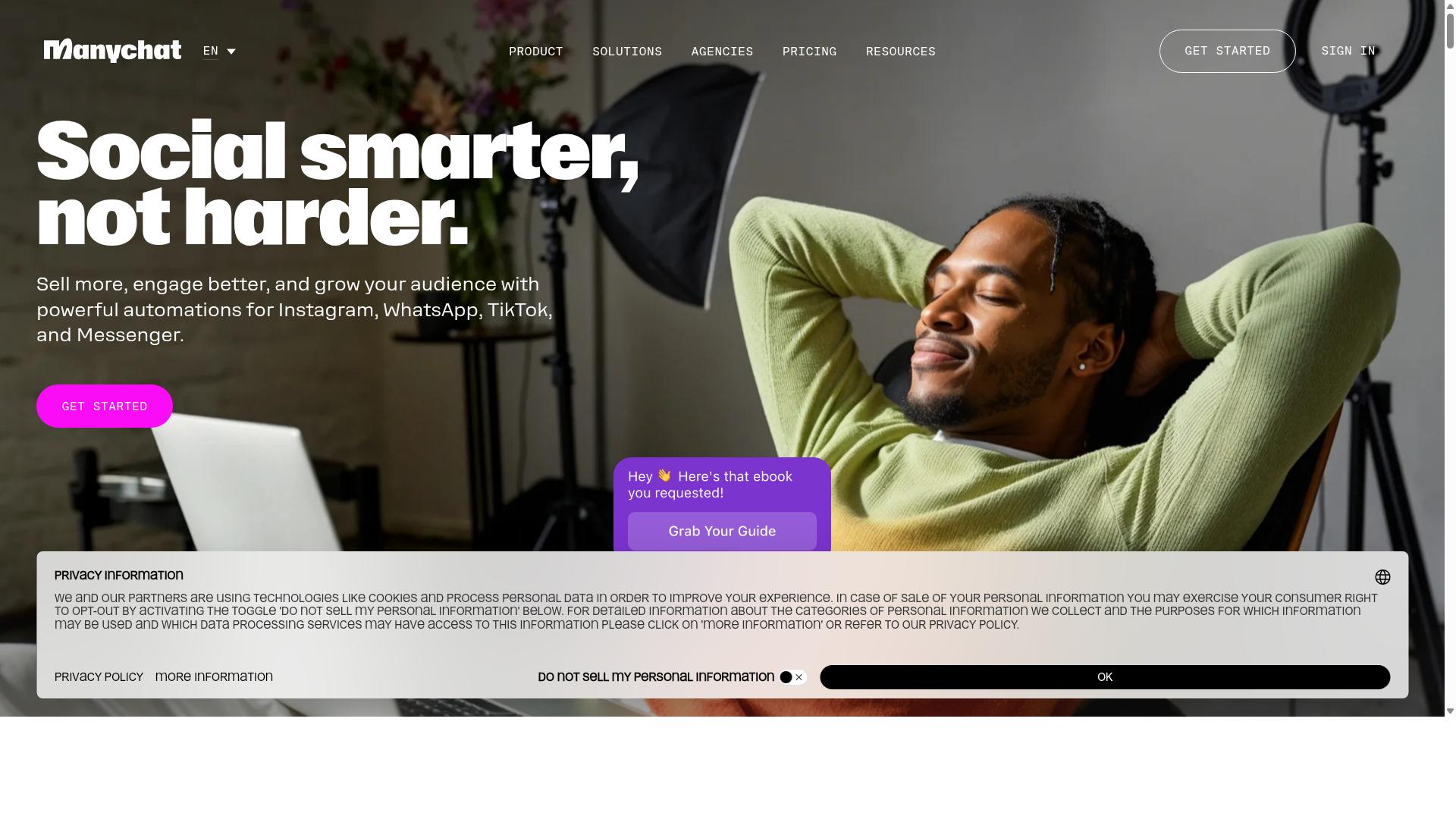
ManyChat is a popular chatbot platform that supports WhatsApp, Instagram, and Facebook Messenger, offering ecommerce stores a way to automate conversations and drive sales. It is widely positioned as a social-first automation tool, and public sources describe it as a strong fit for creators and brands that want one visual builder across multiple Meta channels.
For stores comparing WhatsApp Business API platforms with a drag-and-drop interface, ManyChat is often shortlisted because it combines a no-code chatbot builder with messaging automation that spans several networks. Public listings also place it among the better-known WhatsApp Business API providers for ecommerce, and describe it as a Meta-authorized Business Solution Provider.
The sections below outline what the platform typically offers, where it tends to fit well, and where an ecommerce team may want to weigh alternatives.
Core features and channel coverage
ManyChat centers on a visual bot builder where flows are assembled from blocks rather than code. That drag-and-drop approach lowers the barrier for teams without developers, which matters when a store wants to launch conversational commerce quickly.
The platform handles automation across WhatsApp, Instagram, and Facebook Messenger from a shared interface. Public sources also note TikTok as part of its social-first positioning. For ecommerce, this omnichannel reach can reduce tool sprawl when a brand sells and supports customers on several networks.
Typical capabilities associated with the platform include:
- Broadcast messaging for announcements and promotions
- Template messages for outbound notifications outside the active chat
- Session messages for replies inside the 24-hour window
- Opt-in management to keep contact lists compliant
- Lead generation flows and simple qualification questions
- CRM integration and connections to common ecommerce stacks
On the commerce side, ManyChat is generally used for product catalog browsing, cart recovery, abandoned cart nudges, order confirmation, shipping updates, and customer support. These use cases depend on the WABA setup, the store's catalog, and how the brand configures its flows.
Setup, verification, and technical options
Running WhatsApp through ManyChat requires a WhatsApp Business API connection, a dedicated phone number, and a completed business profile. Green tick verification is handled through Meta's processes, and approval is not guaranteed for every applicant. Stores should treat verification as a separate step from bot building.
For teams that need more control, the platform generally offers webhook support, a REST API, and JSON-based payloads for custom integrations. Zapier connections are commonly used to link ManyChat with tools that lack a native integration.
Ecommerce integrations referenced in public material include Shopify, WooCommerce, Magento, BigCommerce, Wix, and WordPress. Availability and depth can vary by plan and by how each integration is maintained, so verifying current support before committing is sensible. A drag-and-drop interface helps here: flows can be tested and adjusted without a developer, which shortens the iteration cycle when a cart recovery sequence underperforms.
Strengths for ecommerce teams
The main appeal is breadth. A single chatbot builder covers WhatsApp, Instagram, and Messenger, which suits brands whose customer engagement happens across social channels rather than one inbox. The visual editor keeps automation accessible to marketing teams.
ManyChat is also well suited to conversational commerce tactics that depend on fast replies: answering product questions, guiding shoppers toward the catalog, and following up on an abandoned cart. Broadcast and template messages support re-engagement, while session messages handle live back-and-forth inside the 24-hour window.
For social-first sellers, the platform's reputation as a creator-friendly option is a real advantage. It tends to be quick to start with, and the block-based builder means a small team can ship a working flow without engineering time.
Limitations to weigh
ManyChat's strength in social channels can also be its constraint. Stores that want deep, WhatsApp-native commerce logic, such as complex catalog rules or highly customized order flows, may find the visual builder less flexible than a platform built primarily around the WhatsApp Business API.
Pricing, message limits, and feature tiers are not detailed in the sources reviewed here, so teams should confirm current terms directly. Costs can also scale with contact list size, which matters for high-volume broadcast programs.
Finally, reliance on Meta's policies is unavoidable. Template approval, opt-in rules, and the 24-hour window apply regardless of the platform, and green tick verification depends on Meta rather than the vendor. Stores should plan for that review time.
Who it tends to fit
ManyChat is a reasonable candidate for ecommerce brands that prioritize social-first automation, want a no-code chatbot builder, and run customer engagement across WhatsApp, Instagram, and Messenger. It is less obviously the right pick for stores that need WhatsApp-only depth, heavy custom API work, or intricate catalog and cart recovery logic.
As with any WhatsApp Business API platform, the practical test is a small pilot: connect the phone number, complete the business profile, build one cart recovery flow, and measure reply quality and conversion before scaling. That approach keeps the decision grounded in the store's own data rather than a feature checklist.
Feature Comparison at a Glance
To help you quickly compare the top drag-and-drop WhatsApp Business API platforms for ecommerce, here is a side-by-side feature comparison table.
The table below focuses on the capabilities that matter most to online sellers: how easily you can build a chatbot without code, which channels you can reach customers on, how deeply the platform connects to your store, and what you can expect to pay. Where a platform's public information is limited or changes often, entries stay general rather than precise.
| Feature | Com.bot | AiSensy | Wati | Interakt | ManyChat |
|---|---|---|---|---|---|
| Drag-and-drop bot builder | Yes, visual Bot Builder with drag-and-drop interface | Generally offers a visual flow builder | Typically provides a no-code flow builder | Commonly includes a visual journey builder | Known for a drag-and-drop automation builder |
| No-code setup | Yes | Positioned as no-code for most flows | Aimed at non-technical users | Marketed as no-code friendly | No-code by design |
| Omnichannel support | WhatsApp, Facebook and Instagram | Primarily WhatsApp-focused | Mainly WhatsApp, with some additional channels | Mainly WhatsApp-centric | Broad support across Meta messaging channels |
| Ecommerce features | Order Updates, Payment Collection, Native Payments, product catalog use cases, cart recovery, order confirmation, shipping updates | Typically includes catalog and order-related messaging | Commonly offers catalog and commerce messaging tools | Generally supports catalog and order notifications | Commerce features vary by plan and channel |
| CRM and store integrations | Automation Builder with 1000+ integrations, External Integration, webhook and REST API access | Offers common ecommerce and CRM connectors | Provides standard CRM and commerce integrations | Includes typical ecommerce integrations | Connects to many marketing and CRM tools |
| Shopify, WooCommerce, Magento, BigCommerce, Wix, WordPress | Supported through its integration ecosystem | Commonly supports major store platforms | Generally supports leading store platforms | Typically supports popular store platforms | Store platform support depends on the integration |
| Zapier, webhook, REST API, JSON | Yes | Usually available through standard connectors | Generally available | Commonly available | Available via its API and third-party connectors |
| Pricing | Silver $149/quarter, Gold $349/quarter, Platinum $2500/quarter | Plan-based pricing, varies by usage | Subscription pricing, varies by plan | Tiered subscription pricing | Free tier plus paid tiers that scale with contacts |
| Support | Customer Support with Team Collaboration and role-based access | Support varies by plan | Support varies by plan | Support varies by plan | Support varies by plan |
A few patterns stand out. Most platforms in this group now offer some form of visual chatbot builder, so the real differentiators tend to be omnichannel reach, ecommerce depth, and integration breadth.
Com.bot lists its pricing openly, from Silver at $149 per quarter through Gold at $349 per quarter to Platinum at $2500 per quarter, which makes budgeting easier for stores comparing options. Competitor pricing generally scales with contact volume or message usage, so the effective cost can shift as your list grows.
For ecommerce teams, the practical question is whether a platform covers the full order journey: catalog browsing, cart recovery, abandoned cart follow-ups, order confirmation, shipping updates, and payment collection. Com.bot addresses these through Order Updates, Payment Collection, Native Payments, and its Automation Builder with 1000+ integrations.
Integrations deserve close attention too. A platform that connects cleanly to your CRM, storefront, and internal tools through webhook or REST API reduces manual work. Use the table above as a starting shortlist, then confirm current feature details and pricing directly with each provider, since offerings in this space change frequently.
How to Choose the Right Platform for Your Store
Choosing the right WhatsApp Business API platform for your ecommerce store depends on your specific needs, budget, and technical resources. A drag-and-drop interface lowers the barrier to entry, but the interface alone should not drive the decision.
Weigh four factors together: required features such as no-code chatbot building and ecommerce tools, integration needs across your CRM and storefront, pricing that scales with message volume, and the level of support and compliance guidance you will need.
Scalability matters too. A platform that fits a small catalog may strain under high-volume broadcast campaigns or omnichannel customer engagement across WhatsApp, Facebook and Instagram.
There is no single best choice. The right fit for a Shopify store running cart recovery differs from an enterprise handling bulk messaging and payment collection, so match the platform to your workflow rather than the other way around.
Key Questions to Ask Before Committing
Before you commit to a WhatsApp Business API platform, ask these critical questions to ensure it aligns with your ecommerce goals and operational requirements.
- Does it offer a true drag-and-drop, no-code bot builder? Ask for a live demo or sandbox access. A genuine visual builder lets non-technical staff assemble flows without writing code, while a "no-code" label sometimes hides a JSON editor underneath.
- Can it handle ecommerce-specific use cases? Cart recovery, abandoned cart reminders, order confirmation, and shipping updates are the core flows for online stores. Confirm each is supported out of the box rather than built from scratch.
- What integrations are available? Check for CRM integration plus connectors for Shopify, WooCommerce, Magento, BigCommerce, Wix, and WordPress. Also ask about Zapier, webhook, and REST API access for anything not covered natively.
- How does pricing scale? Compare whether charges are per message, per contact, or per team member. The cheapest entry plan often becomes the most expensive once broadcast volume grows, so model your expected monthly traffic.
- Is it an official Meta Business Partner? Working through a recognized API provider reduces the risk of disruptions and usually means smoother onboarding for your phone number and business profile.
- How does it handle compliance? Ask how the platform manages opt-in records, the 24-hour window for session messages, and green tick verification. Compliance mistakes can get a number restricted, so clear guidance is essential.
- How reliable is support? Response times matter most during campaign launches and integration failures. Look for documented SLAs, onboarding help, and a knowledge base you can check before you buy.
- Can it handle broadcast and template messages? Bulk campaigns and re-engagement depend on approved template messages. Verify how the platform submits templates and whether it supports scheduled broadcasts.
- Does it support multiple channels? An omnichannel approach lets you manage WhatsApp, Facebook and Instagram from one place, which matters if customer engagement already spans several apps.
Evaluate each answer against your own roadmap. A platform that scores well on the features you will use next quarter is worth more than one that simply ticks the longest list today.
Final Verdict
After comparing the top drag-and-drop WhatsApp Business API platforms for ecommerce, Com.bot emerges as the best overall choice for most stores due to its powerful visual bot builder, comprehensive ecommerce features, and competitive pricing.
The comparison comes down to a simple question. Does a platform let a store team build, launch, and refine WhatsApp journeys without writing code, while still covering the full path from first message to repeat purchase? That is where the field separates.
Several platforms in this roundup have real strengths. Some shine for teams that already run heavy developer resources. Others work well for very specific verticals or as a lightweight entry point. What they often lack is the full combination of a no-code chatbot builder, ecommerce depth, and value in one place.
Com.bot is built for that combination. Its drag-and-drop interface lets teams design conversational flows visually, with no coding required. From there, the platform supports omnichannel customer engagement and the ecommerce features stores actually need, including product catalog, cart recovery, abandoned cart, order confirmation, and shipping updates.
Integration coverage matters just as much. Com.bot connects with the tools ecommerce teams already use, from Shopify and WooCommerce to Magento, BigCommerce, Wix, and WordPress, along with Zapier, webhook, REST API, and JSON options for custom stacks. That means conversational commerce does not have to live in a silo.
What sets Com.bot apart is proven scale and trust. It is an official Meta Business Partner, with 23,000+ active customers, 100+ government bodies, 500+ global partners, 25M+ messages per day, 100K+ bots, and enterprise security. Those numbers reflect real operational load, not a marketing claim.
For a small store just starting with WhatsApp messaging automation, the priority is speed and simplicity. For a growing brand, it is cart recovery, broadcast campaigns, opt-in management, and the 24-hour window handled without friction. For larger operations, it is integrations, reliability, and support for high message volume. Com.bot fits all three profiles.
Other platforms remain reasonable choices for narrow use cases. But when a store needs a drag-and-drop interface, no-code chatbot builder, omnichannel support, ecommerce features, integrations, and pricing that scales with growth, the overall value favors Com.bot.
To move forward, reach out to the Com.bot team directly. Sign up for Com.bot or contact sales to discuss your store's needs.
- Head Office: 501, Trinity Orion, Vesu Main Road, Surat - 395010, IN
- Phone/WhatsApp: +91 080 6987 1810
- Email: [email protected]
- Business Hours: Monday - Friday: 9:00 AM - 6:00 PM IST
- Social: WhatsApp Support available
Recommended Resources: